How it works
The head: a cap over the knob you already use
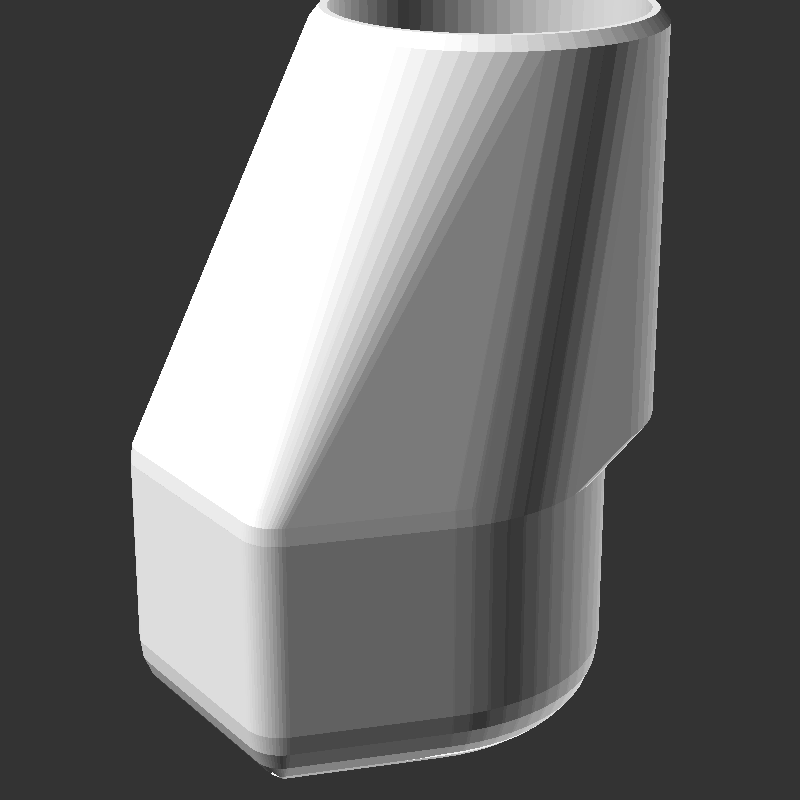
The tilt control of an inter-pane blind is a small fluted knob on a thin flexible shaft. BlindBot's head is a printed cup whose internal splines drop into those flutes. You push it up over the knob from below; a slim tail behind it docks into the existing hook cleat so the reaction torque — and the weight — is carried by the frame, not by the fragile shaft and its clip joint.
Torque safety, in layers
- Mechanical clutch: an O-ring slips just above the blind's running torque.
- Current limits: the driver firmware runs at low current; homing uses even less.
- Soft end stops: motion is clamped just inside the calibrated hard stops.
- Push-fit release: pull the head off by hand at any time — that is the manual override.
One controller, two heads
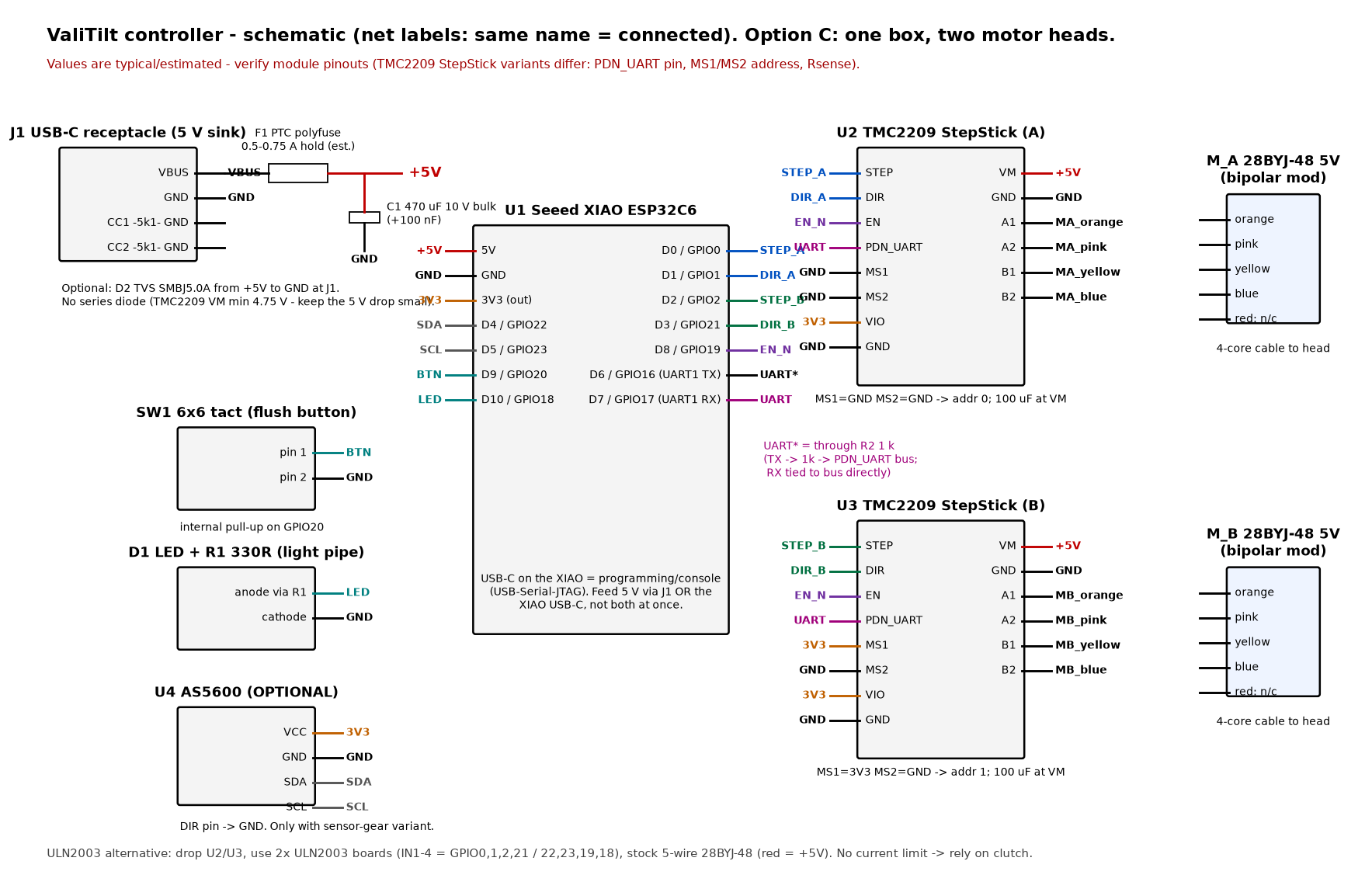
A pocket-size box (Seeed XIAO ESP32C6 + two quiet TMC2209 stepper drivers) hides low behind a curtain. Thin white 4-core flat cable runs up the frame edge to each head. The firmware serializes moves so both blinds never run at once.
Position without sensors
A geared stepper driven slowly under light load does not lose steps. A guided calibration records the two hard stops and the horizontal position. After anyone turns the knob by hand (the clutch slips), one button press re-homes gently into the closed-up stop.
Matter tilt mapping
The controller exposes itself as a Window Covering device with tilt and position-aware tilt — no lift. 0 % = slats horizontal (open); 100 % = closed in your preferred direction. Each sash is its own tile. Control is local to your home network after the first commissioning.